
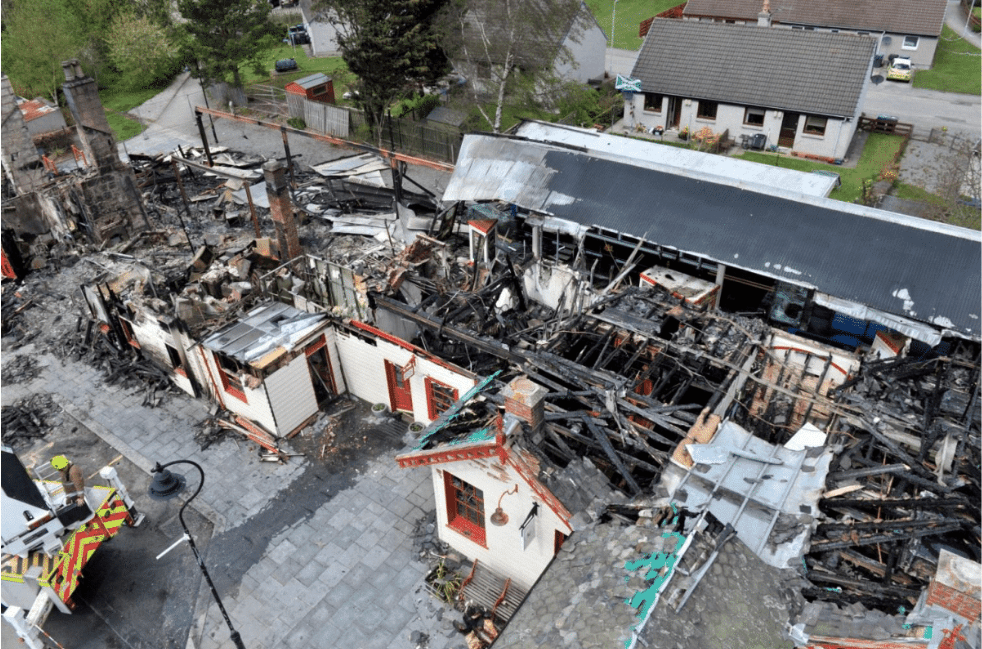
January 2017, Inverness Contractor Macleod Roofing Ltd Appointed as The Roofing Contractor to carry out the slating and lead works to this Historic Building. After the initial cleaning up, the structure is painstakingly re-built to the original design. 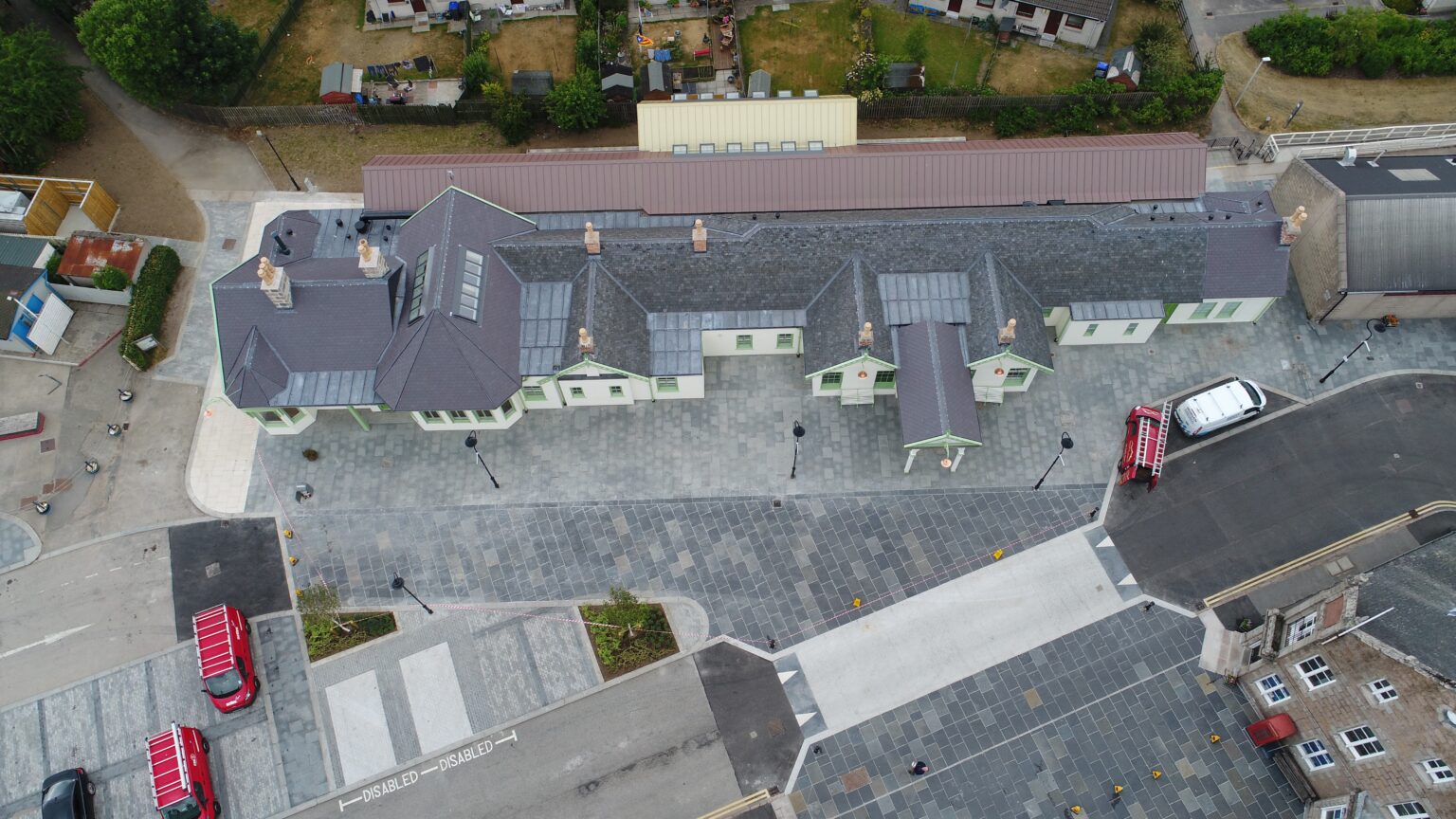
What We Did
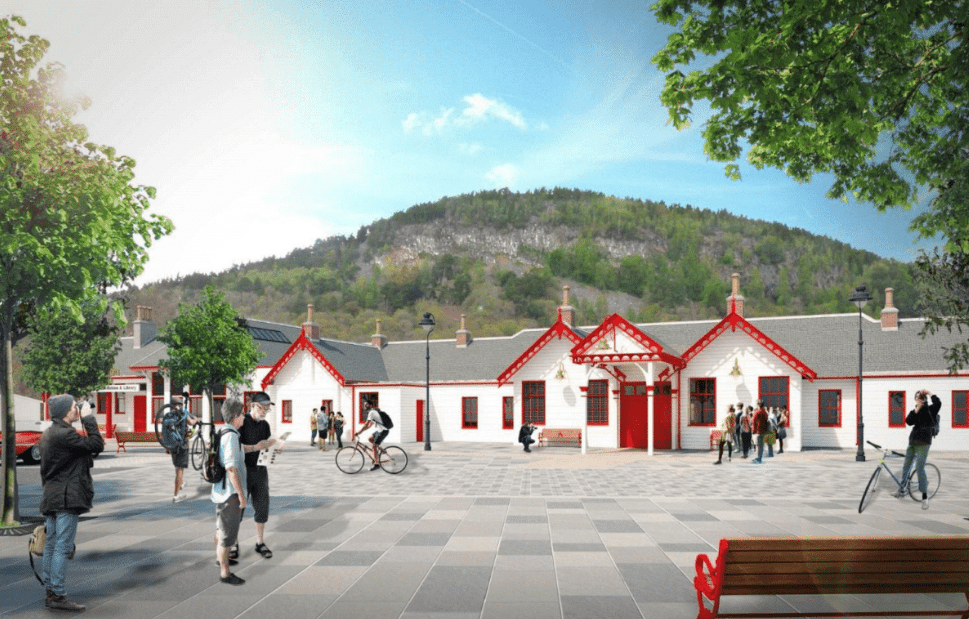
Ballater Rail Station built in 1866 and was used by the royal train when visiting Balmoral estate.
A complicated structure, which required great time and effort to achieve the historic re-opening.
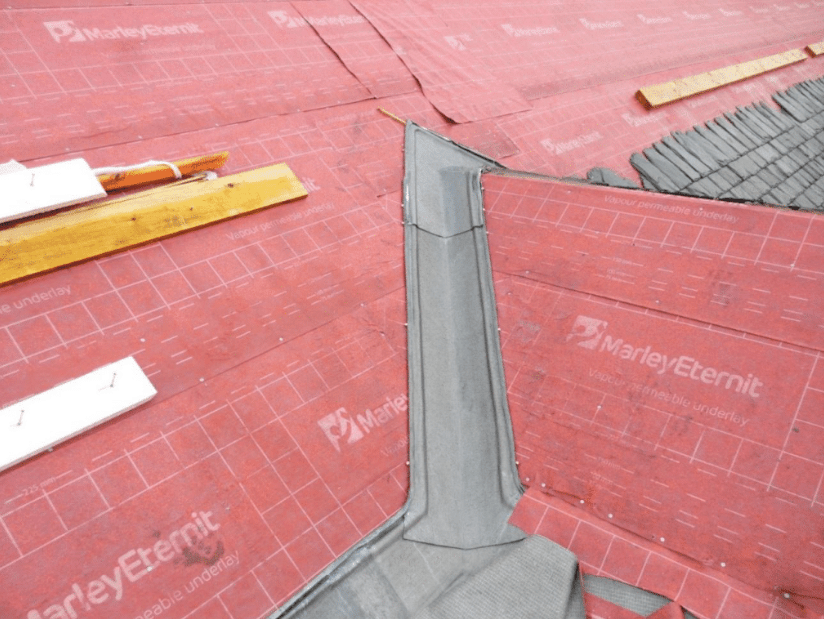
The lead flat roofs were renewed in code 7 lead, identical in every aspect to the original layout of the building.
The ridge and hip flashings were also replaced in code 7 lead and secured in place with stainless steel-terne coated tingles. The various aprons, valleys and abutment flashing were replaced in code 6 lead, all hand bossed in situ.
The refurbished building was under close scrutiny at all times from the local authority, Morgan Sindall and even his royal highness Prince Charles & Camilla paid a royal visit and spent some time going over several details of the lead work.
The slates were replaced in a like for like style, with reclaimed west highland slates laid to the same format as the original roof, the only difference the fixings were now copper in lieu of galvanised steel and the introduction of a breather membrane.
The slates were reclaimed from various sources, some 20’000 were required along with 7000 new Welsh slates and circa one thousand scalloped slates.
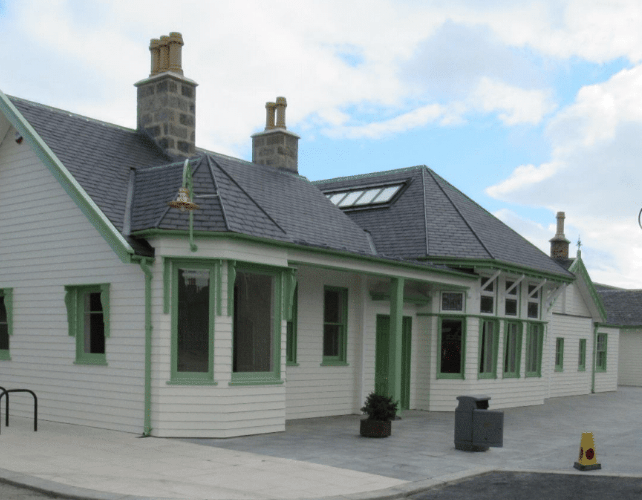
The roofs are styled in a typical Victorian design with lots of hips, valleys, decorative barge boards and soffits. Particular care was taken to ensure the building was refurbished to a very high and exacting standard.


The Result: A Victorian Roof Restored
Ballater Station’s roof looks as it did when the station opened in 1866. The original format of hips, valleys, decorative barge boards and soffits has been rebuilt using around 20,000 reclaimed West Highland slates, with about 7,000 new Welsh slates and 1,000 scalloped slates where the originals couldn’t be saved.
Under the slate, the roof is built to last much longer. Copper fixings replace the original galvanised steel, a new breather membrane sits below, and all the lead is hand bossed in situ, from the Code 7 flat roofs to the Code 6 valleys and aprons.
The work was closely monitored by the local authority and Morgan Sindall, and the leadwork was good enough to be shown to royal visitors.
For a station built for the royal train to Balmoral, that seems a fitting finish.
