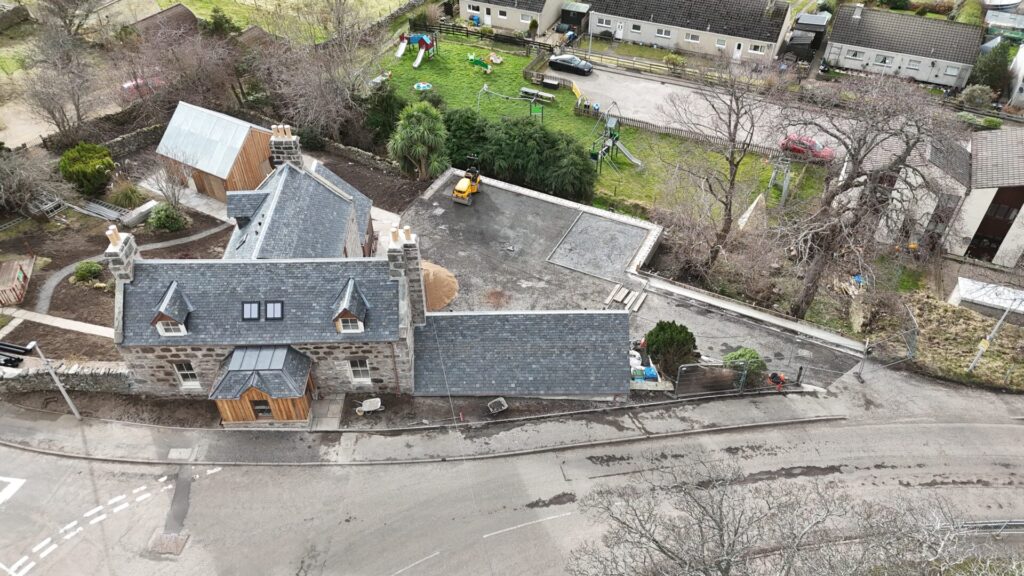
At Tigh-Nan-Ubhal in Tongue, some of the slates protecting the roof had been there for more than 130 years.
That’s more than a century of Highland winters, Atlantic storms and everything else Scotland’s north coast could throw at them. So, when the time finally came to restore the roof of this traditional Victorian stone property, ripping everything off and starting again was never really the plan.
Instead, we wanted to save as much of the original Ballachulish slate as we possibly could.
What followed was a 300m² heritage roof restoration involving thousands of individually handled slates, traditional Scottish roofing techniques, carefully sourced reclaimed materials and plenty of patience. Because when you’re working with a roof that has already lasted more than a century, you want to make sure you do it justice.
Restoring the Original Ballachulish Slate Roof
Ballachulish slate is an important part of Scotland’s roofing heritage. Quarried in the Highlands and used on buildings across the country for generations, it’s known for its distinctive character and durability.
There’s just one problem: all original Ballachulish quarries closed decades ago. So, before we could think about putting the roof back together, we had to find out exactly what could be saved.
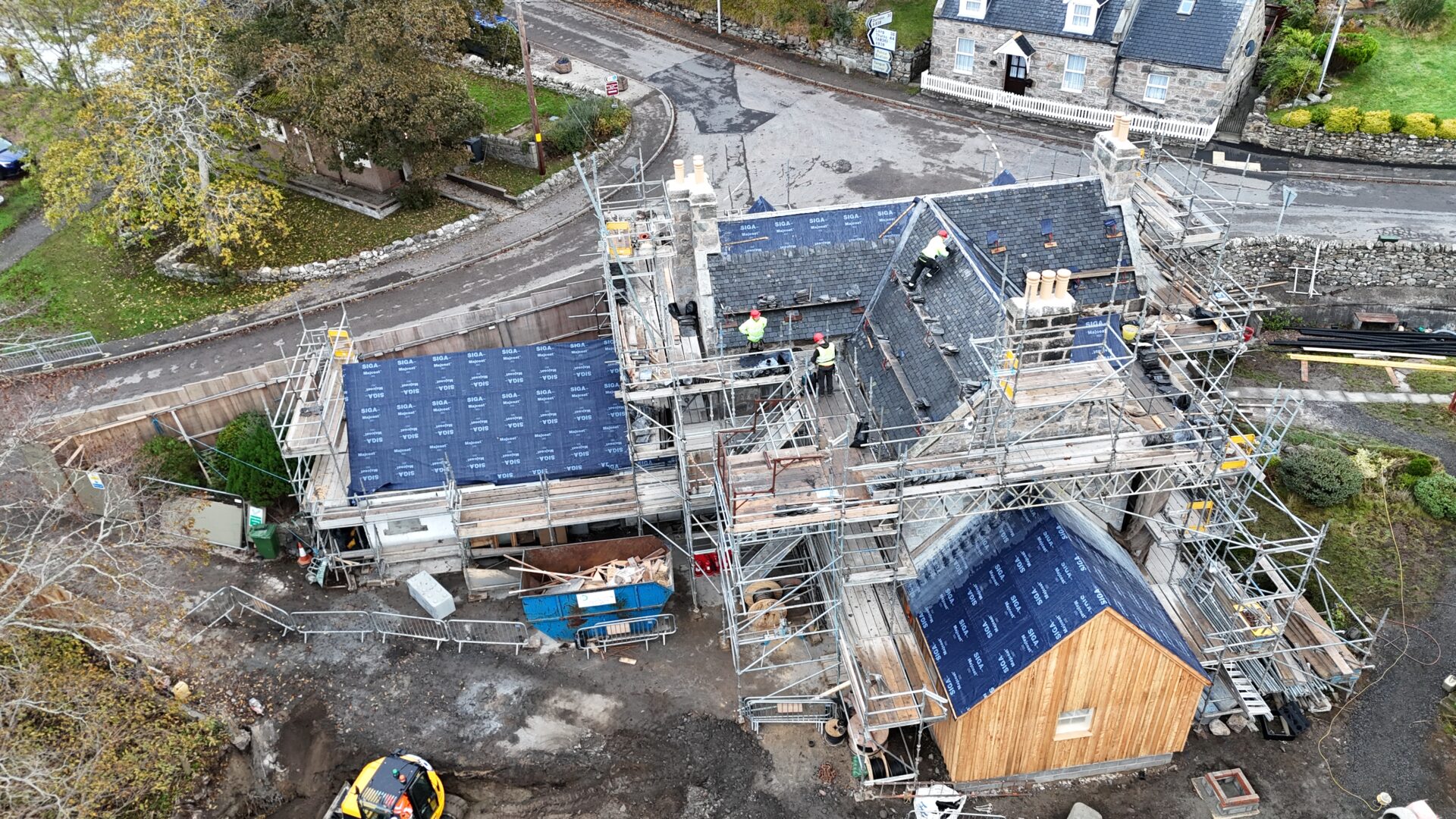
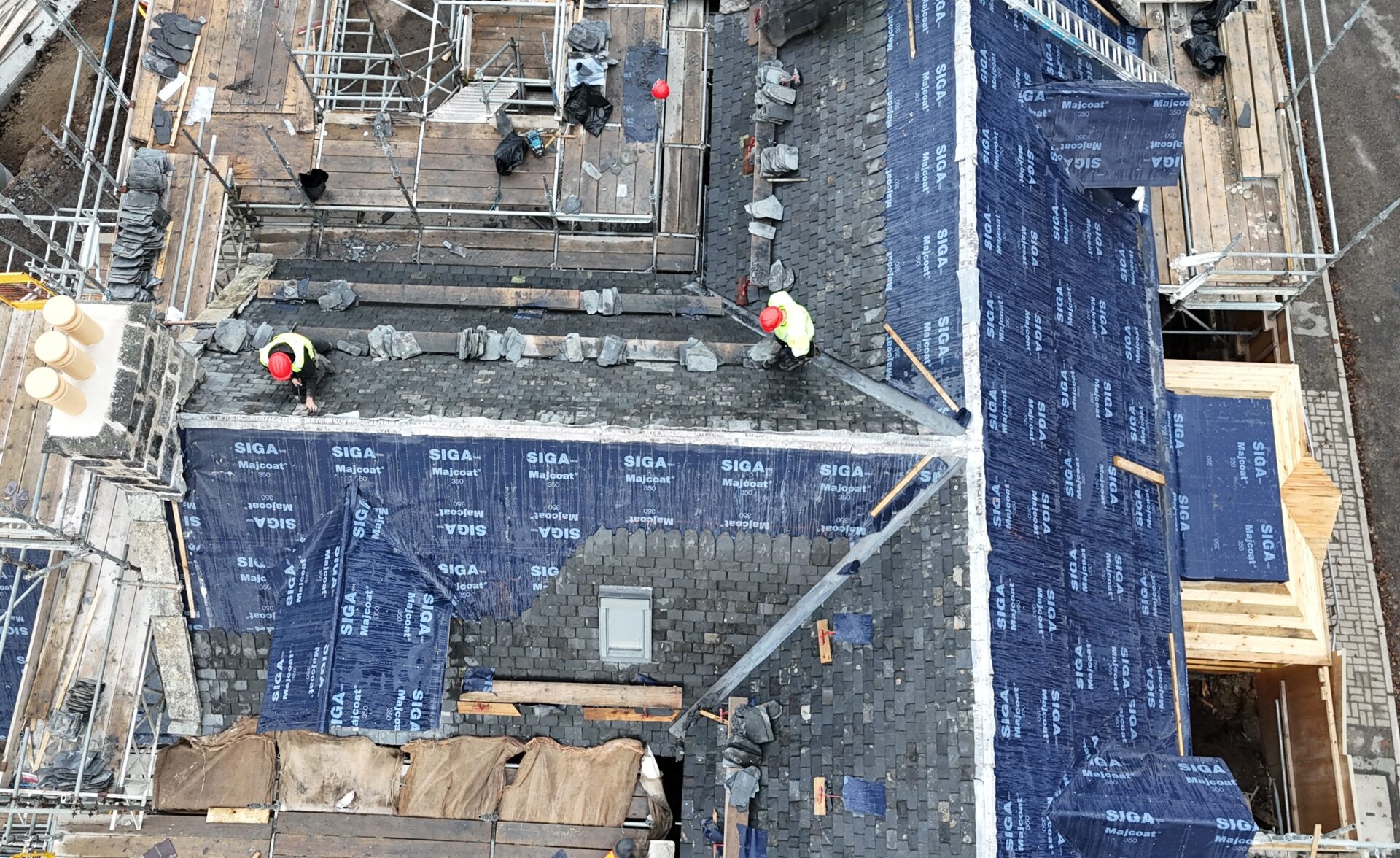
To do this, the existing roof was carefully stripped, with every original slate individually inspected to determine whether it was suitable for reuse. Those that made the cut were then cleaned, dressed and graded by hand according to their size, thickness and condition which, in the end, saw us save approximately 50% of the original Ballachulish slate.
As for the rest, there was no catalogue to order from, so around 10,000 reclaimed Ballachulish slates had to be sourced from established heritage stock, carefully selected to complement the colour, texture, thickness and weathered appearance of the originals.
It meant considerably more work than simply replacing the roof with new materials, but on a building like Tigh-Nan-Ubhal, simply replacing what was there was never really the point.

Putting a 130-Year-Old Roof Back Together
Once we had the slate, the next challenge was working out exactly where thousands of individual pieces belonged.
The roof was reinstated using traditional diminishing courses, a historic Scottish slating technique where the largest and heaviest slates are positioned at the eaves before gradually reducing in size towards the ridge. That meant every original and reclaimed slate had to be assessed, dressed, graded and positioned as part of the overall roof.
In many ways, it was like completing a very big, very heavy jigsaw puzzle.
Each slate was then hand-holed and double-fixed using solid copper nails, providing the durability and corrosion resistance needed for a property sitting in one of Scotland’s more unforgiving coastal environments.
Careful setting out, consistent coursing and accurate headlaps were also monitored throughout the installation, ensuring the finished roof remained true to its traditional appearance while providing the weather protection expected from a modern heritage roof restoration.
Bringing Modern Performance Under a Traditional Roof
Preserving the character of Tigh-Nan-Ubhal mattered, but so did making sure the restored roof could continue doing its job for decades to come.
That meant carefully introducing modern roofing technology without changing the appearance that had defined the property for generations.
Beneath the Ballachulish slate, we installed a TLX Batsafe breathable roofing membrane to provide effective moisture management while also satisfying the ecological planning requirements of the project.
This specialist anti-entanglement membrane is designed to allow protected bats to use the roof space safely, adding another consideration to a project already balancing heritage, performance and the practical realities of working with a 130-year-old building.
Elsewhere within the wider roof refurbishment, 280mm Pavatherm insulation was installed as a separate package of works to improve the thermal performance of the property.
Preserving More Than the Building
Reusing the original slate wasn’t only important for the appearance of Tigh-Nan-Ubhal. It also meant that approximately half of the existing roof covering could remain in use rather than becoming waste.
And for a finite heritage material like Ballachulish slate, that matters.
By salvaging everything that remained serviceable and using reclaimed slate for the rest, we were able to dramatically reduce the need for replacement material while preserving an increasingly scarce part of Scotland’s built heritage.
The addition of the Batsafe membrane allowed that same approach to extend to the wildlife sharing the building, ensuring the restored roof could meet modern ecological requirements without compromising its traditional appearance.
For us, it was a reminder that sustainability doesn’t always mean replacing the old with something new. Sometimes, it means recognising what is already worth keeping.
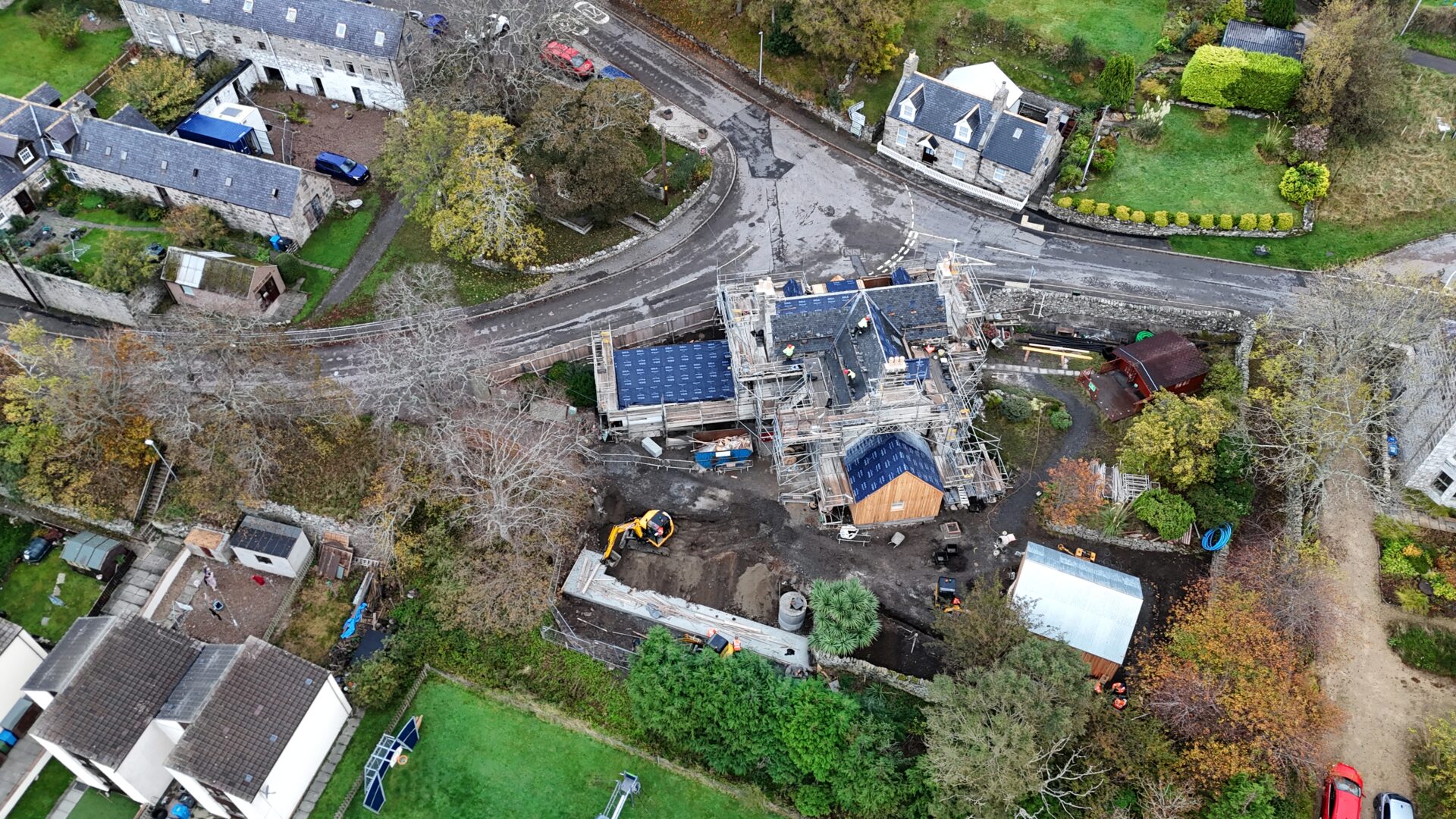
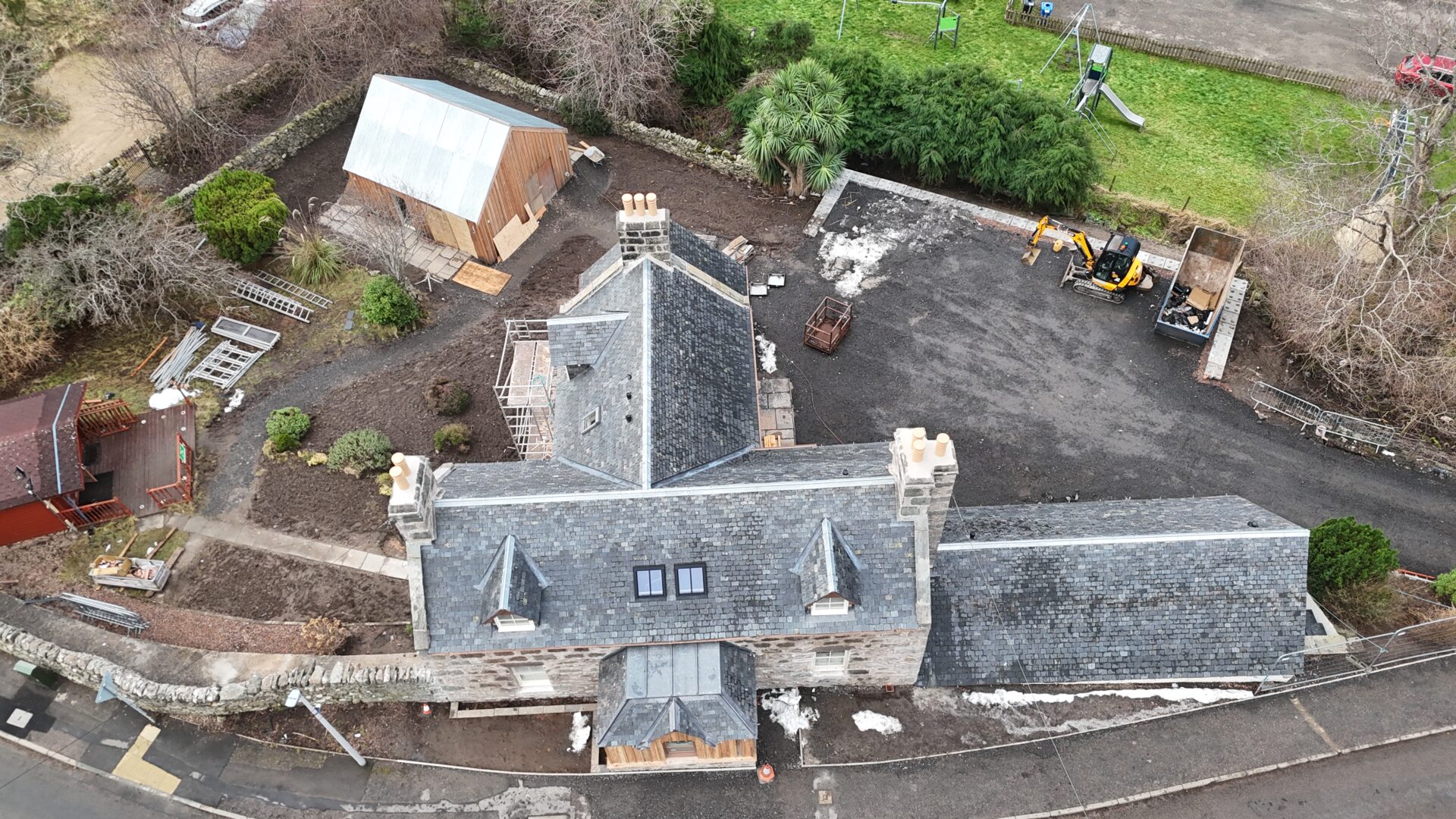
The Result: Another Chapter for a Highland Roof
There would have been easier ways to re-roof Tigh-Nan-Ubhal, but easier wasn’t what this building needed.
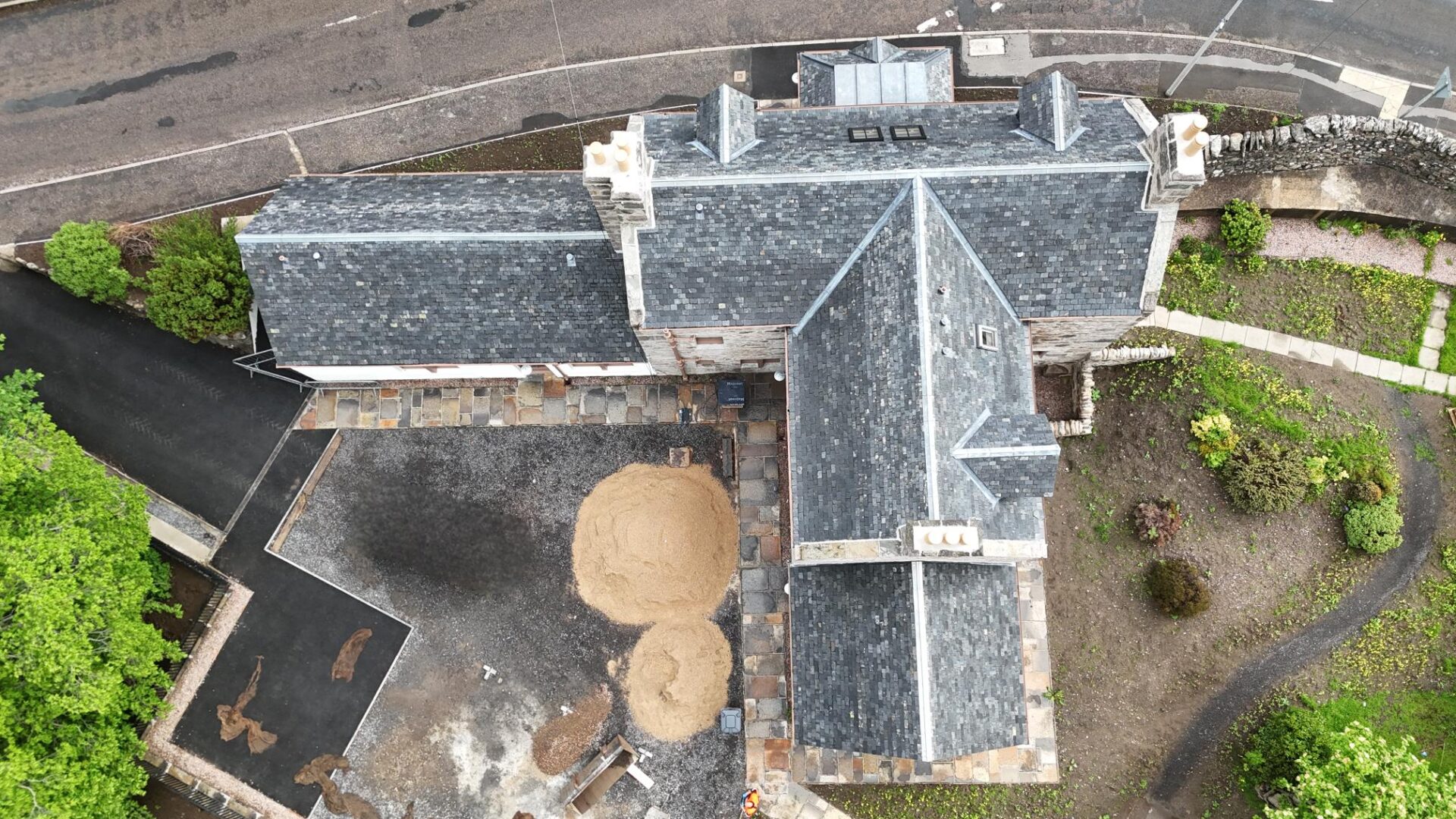
Instead, approximately half of the original Ballachulish slate is now back where it belongs, sitting alongside carefully sourced reclaimed material and installed using the traditional Scottish roofing techniques that would have shaped roofs like this generations ago.
Beneath it, modern materials provide the moisture management, ecological protection and performance needed to help carry the building into its next chapter.
However, the part we’re most proud of, is that the result doesn’t look like a brand-new, modern roof installation. It looks like it belongs.
And for a Victorian property that has already spent more than 130 years standing against the weather on Scotland’s north coast, we can’t think of a better result than that.